The best dog GPS tracker for hiking is the one that still works where you actually lose your dog. That sounds obvious. It is also the exact variable most roundups skip, because it is inconvenient: a cellular tracker is excellent at the trailhead and worthless on a backcountry ridge, and the ridge is where dogs disappear.
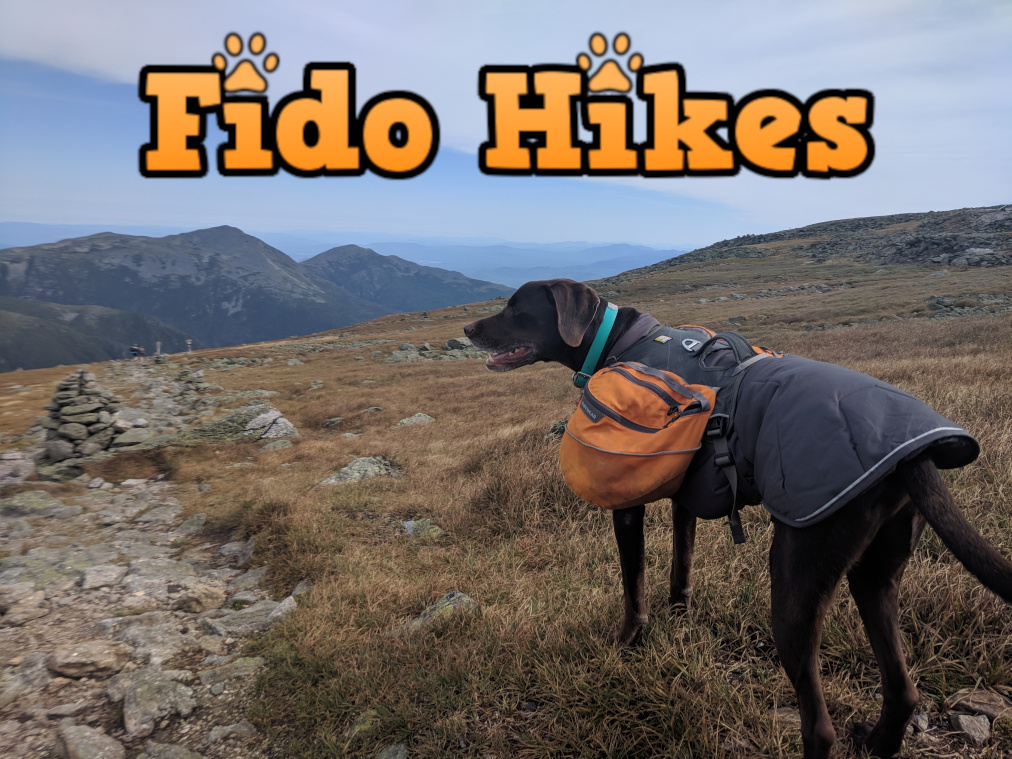
Somewhere in the Whites, on the stretch of the Appalachian Trail where my phone had been in SOS-only for most of a day, Toby went stiff at something in the scrub and I had a very clear thought about what a collar tracker would have been doing right then. Nothing. It would have been doing nothing. That is the whole argument of this page.
I want to be straight about what this is. Toby and I have put in 900 Appalachian Trail miles as part of 1,600-plus trail-testing miles, and the harness and the first aid kit on this site are things I have actually beaten up. These trackers are not. This is a specs-and-architecture comparison, every number pulled from Tractive’s and Garmin’s own published documentation rather than from memory or a press release someone recycled. Where a spec could not be verified, I left it out instead of guessing.
| Tracker | Price | Tech | Range | Weight | Battery (tracking) | Offline maps | 2-yr subscription |
|---|---|---|---|---|---|---|---|
| Tractive Smart | $55.30 | LTE cellular | Unlimited with signal | 1.4 oz | Up to 6 days without Power Saving Zones | No, phone app needs data | $144 to $240 |
| Tractive XL | $69.00 | LTE cellular | Unlimited with signal | 2.5 oz | Up to 20 days without Power Saving Zones | No, phone app needs data | $144 to $240 |
| Garmin Alpha 200i | $499.99 | Radio + satellite | Over 9 miles, no cell needed | Handheld + collar unit | Handheld up to 20 hr; collar 20 to 40 hr | Yes, preloaded TopoActive | $0 for tracking |
The Only Question That Matters: Where Do You Lose Bars?
Buying a cellular tracker for backcountry hiking is the most expensive mistake on this page, and it is the one the category is built to encourage. Answer this first, before price, before battery, before which dog influencer likes which collar.
Pull up your last few hikes. Did your phone hold signal the whole time? If yes, buy cellular and stop reading the Garmin section. If your phone dropped to SOS-only or no service for any meaningful stretch, understand what you are choosing: a cellular tracker will fail in exactly the conditions you hike in, and paying less for it does not make it a smaller version of the right tool.
How Cellular Actually Fails
A Tractive tracker has a SIM inside, like your phone. It gets a position from satellites and then needs a mobile network to tell you about it. That second half is the fragile half. No bars, no report.
The failure mode is worse than “no data,” though, and this is what the spec sheets never say out loud. Coverage does not end at a clean line. It frays. You get a last-known position from eleven minutes ago at the bottom of a drainage and no way to know whether that is where your dog is or where your dog was when the signal died. A stale dot on a map is not a location. It is a rumor.
Tractive’s fallback in a dead zone is a short-range Bluetooth Find Mode. That is useful for a dog wedged under a deck. It is not useful for a dog that took off after a deer and cleared a ridgeline ninety seconds ago.
How Radio Actually Works
The Garmin Alpha uses a direct radio link between the collar device and a handheld receiver you carry. There is no network in the middle to fail. Garmin publishes a range of over 9 miles, depending on terrain, with location updates every 2.5 seconds for up to 20 active dogs.
Depending on terrain is doing real work in that sentence. Radio wants line of sight, so a ridge between you and the dog cuts the practical range hard. But the floor is honest in a way cellular’s is not: it degrades with geometry you can see and reason about, rather than with tower placement you cannot.
Built into the 200i is Garmin inReach, which adds two-way satellite messaging and SOS on the Iridium network. That layer is for you, not the dog, and it matters at exactly the distance from a road where losing the dog stops being the only problem.
What Two Years Actually Costs
Nobody prices these honestly, so here is the arithmetic. The device is the down payment; the plan is the bill.
Tractive’s published plans, straight off their subscription page:
| Plan | Billing | Effective monthly | 2-year subscription total |
|---|---|---|---|
| Basic | Annual | $9/mo | $216 |
| Basic | 2-year | $6/mo | $144 |
| Premium | Annual | $10/mo | $240 |
| Premium | 2-year | $7/mo | $168 |
| Premium | 5-year | $5/mo | $300 over 5 years |
So two years of a Tractive tracker costs somewhere between $144 and $240 in subscription alone, on top of the hardware. The cheap headline price you saw on the product listing is not the price.
The Garmin Alpha 200i has no tracking subscription. The radio link between handheld and collar is device-to-device, so there is no network operator to pay. Garmin does require an active satellite subscription for the inReach messaging and SOS features, billed separately, and I am deliberately not quoting inReach dollar figures here because I could not verify current pricing against Garmin’s own published rates. Check it directly before you budget.
That changes the shape of the decision. The Garmin’s sticker price is several hundred dollars higher, but it is a purchase, not a lease. Around the two-to-three year mark, a subscription you are still paying starts closing the gap on hardware you already own. If you hike with a dog for a decade, the math is not close.
Battery Life in the Mode You Will Actually Use
Here is the number that gets laundered hardest in this category, and where I think most roundups quietly mislead people.
Tractive publishes two battery figures per device, not one:
- The DOG 6 is rated up to 2 weeks with Power Saving Zones, but only up to 6 days without them.
- The DOG 6 XL is rated up to 6 weeks with Power Saving Zones, and up to 20 days without.
Power Saving Zones are what generate the impressive headline. The feature works by letting the tracker stand down inside a geofenced area it already knows, typically your house and yard, where it does not need to burn radio reporting a position that has not changed.
Which means the big number is a description of your dog being home. On trail, in unfamiliar terrain, hunting for signal, none of those conditions hold. The right planning number for hiking is the lower one: about 6 days for the standard unit, about 20 days for the XL. Weak coverage makes it worse, because a tracker straining to reach a distant tower draws more power than one sitting on a strong signal. Assume less than the low figure on marginal-signal trails.
Garmin’s numbers are shorter and, to their credit, stated plainly. The handheld runs up to 20 hours, or up to 15 hours with inReach enabled, on a rechargeable, replaceable lithium-ion battery. The collar device runs 20 to 40 hours, determined by which handheld it is paired with. Replaceable is the operative word: you can carry a charged spare for the handheld, which is not something a sealed collar tag lets you do.
Different units, though, and it is worth being clear about the comparison. Tractive’s weeks are passive standby. Garmin’s hours are active tracking with a screen on. You charge the Garmin the night before every trip. You charge the Tractive every week or so and mostly forget about it.
Weight on the Collar
Tractive publishes 1.4 oz for the DOG 6 at 2.8 × 1.1 × 0.7 inches, and 2.5 oz for the DOG 6 XL at 3.3 × 1.9 × 0.8 inches. Both are rated IP68, which Tractive describes as fully waterproof, and that rating matters more than the ounces the first time your dog decides a beaver pond is a shortcut.
An ounce and a half on a 60-pound dog carrying a loaded pack is not a real consideration. What is real: the XL’s larger body is genuinely awkward on a small or narrow-necked dog, and the extra battery it buys you is worth nothing if the unit swings around and rubs. Size to the dog, not to the spec you wish you had.
The Garmin is not comparable on this axis and pretending otherwise would be dishonest. The dog wears a purpose-built collar device, and you carry a 3.5-inch handheld with a sunlight-readable touchscreen. It is a system, not a tag. That is the cost of not needing a cell tower.
Whatever you clip on, clip it to something you can grab. A tracker tells you where the dog is; a harness with a real handle is how you get hold of them when you get there. That combination is the actual safety system, and it is why the best dog harness for hiking matters more than the electronics.
Offline Maps: The Gap Nobody Mentions
A tracker gives you a position. A position is only useful against a map. In a dead zone, cellular trackers lose both at once, and that compounding failure is the thing I would most want a buyer to understand.
Tractive renders your dog’s location in a phone app. The app needs data to draw the map. So the moment you are somewhere the tracker cannot report, you are also somewhere your phone cannot show you the terrain between you and the last known dot. Two failures, one cause.
The Alpha 200i comes preloaded with Garmin TopoActive mapping plus direct-to-device BirdsEye Satellite Imagery, rendered on a 3.5-inch sunlight-readable touchscreen. The map is on the device. It works with no towers, no plan, and no phone, and you can read it at noon in the open, which is not a thing phone screens do well.
If you take one line from this page: in the backcountry the map is half the tool, and a phone-app tracker brings none of it.
1. Tractive Smart Dog GPS Tracker | Best Overall
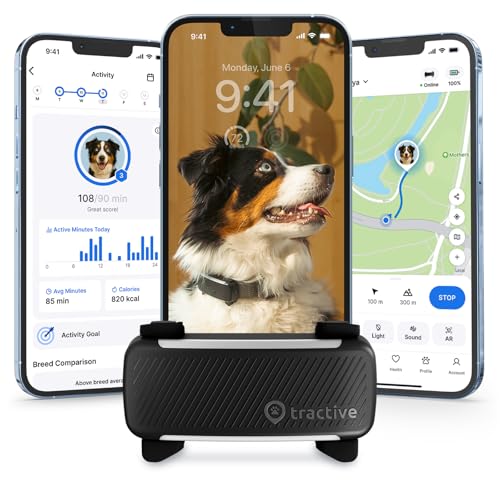
For most hiking dogs on most trails, this is the correct tracker, and “most trails” is not a hedge. The majority of dog hiking in this country happens in regional parks, state forests, and popular trail systems with usable coverage. In that world, unlimited live range for a couple of ounces is a very good deal.
At 1.4 oz and 2.8 × 1.1 × 0.7 in it clips to the collar you already own and disappears. It is IP68 rated. LIVE tracking updates every 2 to 3 seconds, which is quick enough to follow a dog in motion rather than reconstruct where they went. The virtual fence alert is the genuinely underrated feature for hikers: set a zone at a dispersed campsite or a busy trailhead and get told the moment your dog leaves it, which beats noticing on your own about four minutes late.
The limitation is the one the marketing works hardest to soften. Unlimited range means unlimited where there is signal. In a dead zone you drop to a Bluetooth Find Mode that helps only once you are nearly on top of the dog. And plan for 6 days, not two weeks, unless your dog spends most of the charge cycle inside a Power Saving Zone at home.
Pros:
- 1.4 oz, IP68, fits an existing collar
- Live tracking with updates every 2 to 3 seconds, no range cap in coverage
- Virtual fence alerts when the dog leaves a set zone
- Activity and health tracking included
Cons:
- Goes dark in true backcountry with no cell signal
- Real-world hiking battery is about 6 days, not the headline 2 weeks
- $144 to $240 of subscription over two years on top of the device
- No offline map; the phone app needs data to be useful
Best for: front-country hikers with reliable coverage. Skip if: your trails routinely drop to no service.
2. Tractive XL Smart Dog GPS Tracker | Best for Big Dogs
Same tracker, bigger battery, bigger body. Tractive lists the XL at 2.5 oz and 3.3 × 1.9 × 0.8 in, also IP68, and the larger cell takes runtime to up to 20 days without Power Saving Zones against the standard unit’s 6. For a multi-day trip where charging is a nuisance, three weeks of margin instead of one is the whole argument.
Everything else is identical, and that includes the part people misread. More battery is not more coverage. The XL reaches exactly as far as the nearest tower, same as the smaller one. If you were eyeing it hoping the bigger unit pushes deeper into the backcountry, it does not, and no amount of battery changes what a cellular tracker is.
Where it earns its place is the long trip with patchy service: something that survives the whole outing on one charge and reports faithfully every time it climbs back into signal. On a dog over about 55 pounds the larger body rides fine. On a small dog it is too much hardware.
Pros:
- Up to 20 days of tracking without Power Saving Zones
- Same live tracking, virtual fence, and IP68 rating as the standard unit
- Larger cell suits multi-day trips with no charging access
- Rides well on dogs over roughly 55 lb
Cons:
- Identical cellular dependency, with all the same dead-zone failure
- 2.5 oz and a wider body are too much on small dogs
- Same $144 to $240 two-year subscription
- Still no offline map
Best for: large dogs on long front-country trips. Skip if: small dog, or you need backcountry coverage.
3. Garmin Alpha 200i Handheld | Best for No-Cell Backcountry
When the trail leaves coverage, this is the only honest answer on the list. The 200i pairs a handheld receiver with a collar device over a direct radio link, so the absence of a cell tower is simply not an input. Garmin publishes over 9 miles of range, depending on terrain, updates every 2.5 seconds, and support for up to 20 active dogs, with more than 20 stored inactive.
The handheld is a 3.5-inch sunlight-readable touchscreen carrying preloaded TopoActive maps and BirdsEye Satellite Imagery on the device. Built-in inReach adds two-way satellite messaging and SOS, which requires an active satellite subscription to use. Battery is up to 20 hours, or up to 15 hours with inReach on, from a rechargeable, replaceable lithium-ion pack. The collar device runs 20 to 40 hours depending on the handheld it is paired with, and carries a 1 ATM water rating against the handheld’s IPX7.
The wall is cost and complexity. This is a several-hundred-dollar system with a learning curve, sold largely to houndsmen and upland hunters, and a casual day-hiker will find it to be more device than the problem requires. But no tracking subscription means the recurring cost is zero for the part that finds your dog, and for people whose trails go dark, the trade is simply correct.
Pros:
- Works with zero cell coverage; radio link straight to the collar
- Over 9 miles of range and updates every 2.5 seconds, up to 20 dogs
- Preloaded TopoActive maps and BirdsEye imagery on a sunlight-readable screen
- No tracking subscription; replaceable handheld battery
Cons:
- Several hundred dollars up front, far above a collar tag
- inReach satellite features need a separate active subscription
- Handheld runs up to 20 hours, dropping to 15 with inReach enabled
- More system than a front-country day-hiker needs to learn
Best for: backcountry hikers and hunters whose trails lose signal. Skip if: you have coverage and want simple and cheap.
A Word on the Cheap Trackers
If your search turned up “GPS trackers” under forty dollars, slow down. Many of those listings are Bluetooth tags wearing GPS marketing. They locate your dog by pinging nearby phones, and on an empty trail there are no nearby phones. The entire mechanism is other people. For finding a dog that ran into the woods, it is the wrong tool, and no honest review recommends one for hiking.
If budget is genuinely the constraint, an AirTag in a collar pouch is at least honest about what it is: a short-range tag on a network you already understand. It will find a dog hiding under the porch. It will not find one half a mile up a drainage. Know which problem you are actually solving before you spend.
And keep the tracker in proportion. It is one layer, not a plan. It tells you where to walk; it does not treat a torn pad or a snake bite when you get there, which is why a real dog first aid kit outranks it in my pack every time. Build the rest of the kit from the trail gear list, get a harness you can grab, and train the recall you hope never to need. The best tracker is the one you never have to open.
Frequently Asked Questions
- Do dog GPS trackers work without cell service?
- Cellular trackers like Tractive do not. They carry a SIM and send location over mobile networks, so with no signal they go dark except for a short-range Bluetooth Find Mode that only helps once you are nearly on top of the dog. If your trails lose coverage, you need a radio system like the Garmin Alpha series, which links the collar directly to a handheld receiver and never touches a cell tower. Match the technology to where you actually hike.
- What does a dog GPS tracker really cost over two years?
- For Tractive, the device price is the small part. Tractive's published plans run $9 per month billed annually on Basic, or $6 per month on the two-year plan billed at $144 every two years. Premium is $10 per month billed annually, $7 per month on a two-year plan at $168, or $5 per month on a five-year plan at $300. So two years of Tractive is roughly $144 to $240 in subscription alone depending on tier and billing. The Garmin Alpha 200i has no tracking subscription at all, though its inReach satellite features require an active satellite subscription if you turn them on.
- How long does a dog GPS tracker battery last in tracking mode?
- Far less than the headline number. Tractive publishes up to 2 weeks for the DOG 6 with Power Saving Zones enabled but only up to 6 days without them, and up to 6 weeks versus up to 20 days for the DOG 6 XL. Power Saving Zones work by standing down inside a known area like your house, which is exactly the feature that does nothing on trail. The Garmin Alpha 200i handheld is rated up to 20 hours, or up to 15 hours with inReach enabled, and its collar device runs 20 to 40 hours. Plan around the lower figure.
- How much does a GPS tracker weigh on the collar?
- Tractive lists the DOG 6 at 1.4 ounces and the larger DOG 6 XL at 2.5 ounces, with both rated IP68 waterproof. For a medium or large hiking dog, an ounce and a half is genuinely unnoticeable next to a loaded pack. The Garmin system is a different proposition: the collar device is a purpose-built unit, and you also carry a 3.5-inch handheld receiver yourself. Weight is rarely the deciding factor here, but it does rule the XL out for small dogs.
- Do dog GPS trackers have offline maps?
- This is the quiet failure point for cellular trackers. Tractive shows your dog's position in a phone app, so the map itself needs your phone to have data. In a dead zone you lose both the tracker's signal and the map you would use to act on it. The Garmin Alpha 200i ships with preloaded Garmin TopoActive mapping and direct-to-device BirdsEye Satellite Imagery on the handheld, so the map lives on the device and works with nothing overhead but sky.
- What about cheap GPS trackers under $40?
- Be skeptical. A large share of sub-$40 listings sold as GPS trackers are Bluetooth tags wearing GPS marketing. They find your dog by pinging nearby phones, a crowd network that does not exist on an empty trail. For locating a dog that ran out of sight into the woods, that is the wrong tool. If budget is the hard constraint, an AirTag in a collar pouch is at least honest about being a short-range tag on a network you understand. Do not trust a no-name listing claiming true GPS at tag pricing.
Get the free Dog Hiking Trail Pack
A printable pre-hike checklist, trail feeding cheat-sheet, and paw + heat safety guide — earned over 900 miles on the AT with Toby. Free, no spam.
Trail-Tested with Toby
Everything on FidoHikes comes from real experience — 900 miles on the Appalachian Trail with our dog Toby. No sponsored posts, no armchair advice. Just what actually worked (and what didn't) on the trail.
Related Articles

Dog Gear List for Thru-Hiking: $880 AT-Tested Kit
The complete dog gear list for thru-hiking: 16 items, $880 total, 900 AT miles tested. Pack weight math, calorie formula, bear canister rules, and paw protocol.
7 Best Dog Harnesses for Hiking (Trail-Tested)
Seven hiking harnesses tested over 1,600 trail miles: Ruffwear Front Range, Web Master, Kurgo, and more. Girth sizing chart, handle ratings, price, and weight.
Dog First-Aid Kit for Hiking: What to Pack (2026)
A dog first-aid kit for hiking starts with a good pre-made base, then a few add-ons that actually save a hike: styptic powder, vet wrap, and wound ointment.