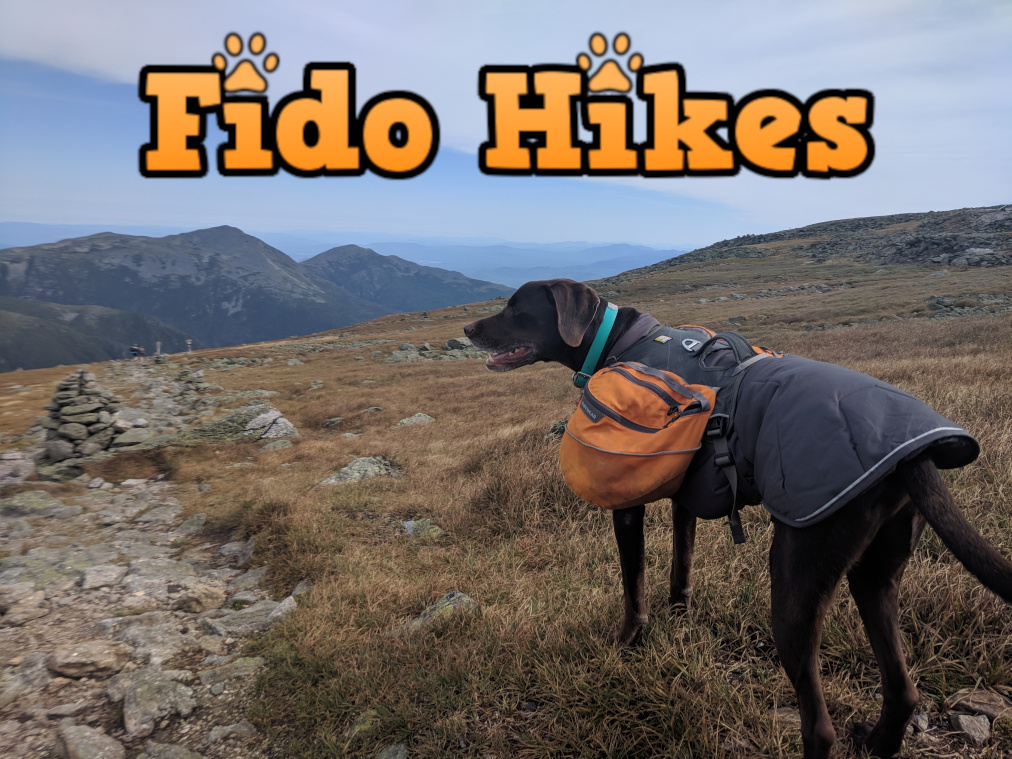

We were three miles into a ridge section of the AT when a Golden Retriever came around a blind switchback and lunged straight at Toby’s face. The owner had the leash wrapped around her wrist, all six feet of it taut as a guitar string. Toby, 75 pounds of chocolate lab/GSP who normally loves other dogs, went stiff and barked so hard his front paws left the ground. It took twenty minutes for his breathing to come back down.
That encounter shaped how I think about how to introduce dogs on trail. Research from Dirtbags with Furbags shows cortisol stays elevated for 72 hours after a stressful dog encounter. One bad meeting on a Wednesday means your dog is still running hot on Friday.
On-leash greetings should be the exception, not the rule. Most trail dogs are better served by a calm pass at distance than a face-to-face sniff between two animals who can’t escape each other. Here is the protocol I built over 900 miles of hiking the Appalachian Trail with Toby: eight steps to introduce dogs on trail safely, from reading body language to recovering after things go sideways.
Step 1: Know Your Dog’s Threshold Before You Leave the Trailhead
Every dog has a distance where they shift from curious to reactive, and you need to know that number before you hit the trail. This is your dog’s threshold distance. Below it, your dog can still think. Beyond it, instinct takes over and training goes out the window.
Leash reactivity falls into two camps. Fear-based reactive dogs are trying to make the scary thing go away. They lunge, bark, and snap because the leash has removed their ability to flee.
Frustration-based reactive dogs want to get TO the other dog and the leash is stopping them. The behavior looks similar from the outside, but the motivation is completely different. Pat Miller, a CBCC-KA, writes in Whole Dog Journal that recognizing which type your dog displays changes the entire approach.
Find your dog’s threshold distance by watching their body during controlled exposures. At 50 feet, are they loose and curious? At 30 feet, do their ears pin forward? At 20 feet, do they stiffen?
That transition point is your starting line. Toby’s threshold was about 25 feet for new dogs and 10 feet for dogs he’d already met.
Before you leave the parking lot, ask yourself one honest question: has your dog had a positive, off-leash play session with another dog in the last month? If the answer is no, plan for distance management, not introductions.
Pre-hike readiness checklist:
| Signal | Status | What It Means |
|---|---|---|
| Relaxed body at 20ft from unknown dog | Green | Ready for parallel walk protocol |
| Alert but recoverable at 20ft | Yellow | Proceed with extra distance, skip greetings |
| Barking, lunging, or freezing at 30ft+ | Red | Distance management only, no introductions |
Pack a front-clip harness, a 6-foot fixed leash (never retractable), and a treat pouch loaded with high-value rewards.
Step 2: Read the Other Dog’s Body Language in 3 Seconds
You have about three seconds from the moment you spot another dog to decide your approach. That’s the window between “I see them” and “we’re too close to redirect.” Make those seconds count by learning to introduce dogs on trail through a fast three-point scan: tail, body, mouth.
Green signals (safe to proceed with caution): Loose, wiggly body movement. Soft eyes with relaxed brows. A sweeping tail held at mid-height. Play bow.
Weight shifting side to side also broadcasts peaceful intent. These dogs are relaxed enough for a controlled approach.
Red signals (increase distance immediately): Stiff, rigid posture. Whale eye, where you can see the whites of their eyes. Raised hackles along the shoulders or spine. A tail held high and rigid like an antenna.
Freezing in place for three or more seconds is another red flag. Any of these mean the dog is over threshold, no matter what the owner is saying.
Calming signals are not green lights. Ruby Leslie of Dogly explains that sniffing the ground, yawning, and lip licking are stress displacement behaviors. The dog is trying to self-soothe, not inviting play. A dog doing all three while approaching is coping, not comfortable. Don’t mistake management for enthusiasm.
The most reliable tell isn’t even on the dog. It’s on the leash. A tight leash means the handler can’t control the situation, the dog isn’t choosing to be calm, or both.
Watch the owner’s body too. Shortened grip, stiff arms, and a wide stance often signal a dog with a history of reactivity. A dog on a taut leash is not relaxed enough for a safe greeting.
Step 3: Use the Parallel Walk to Introduce Dogs on Trail
The parallel walk is the single most effective way to introduce dogs on trail, and it works because it removes the pressure of a head-on approach. Dogs naturally greet each other in a banana curve, arcing to the side rather than walking straight at each other’s faces. Jennifer Thornburg notes that leashes force the unnatural head-on approach that triggers most on-leash conflicts.
Here are the seven sub-steps:
1. Signal the other hiker from 30+ feet away. A simple “Can we do a parallel walk?” or a wave gets the coordination started before either dog is over threshold. If they don’t know the term, explain in one sentence: “We walk the same direction, 20 feet apart, and let them get used to each other.”
2. Start 20-30 feet apart, moving in the same direction. Both dogs should be on the outside, handlers between them. Pick a direction and go.
3. Keep a smiling U in the leash. Zero tension. The leash should drape between you and your dog in a loose curve. If you’re pulling, your dog reads the tension and escalates.
4. Mark and reward calm glances. Every time your dog looks at the other dog and doesn’t react, say “yes” and deliver a treat. This is the BAT (Behavior Adjustment Training) slow-stop technique developed by Grisha Stewart.
5. Position the more reactive dog slightly behind. The dog in back has a view of the other dog without the pressure of being watched. This reduces confrontational energy.
6. Swap positions after 30-60 seconds. Let each dog experience both the front and back position. Watch for loosening body language, slower movement, and soft glances.
7. Decrease distance only when both dogs are loose and wiggly. Close the gap by 5 feet at a time. If either dog stiffens, increase distance and reset.
When to skip the parallel walk entirely: The trail is too narrow for side-by-side walking. Either dog is already over threshold (barking, lunging, freezing). The other owner can’t or won’t coordinate.
A wide fire road or open meadow is ideal. A narrow singletrack with a cliff edge is not.
Step 4: Enforce the 3-Second Greeting Rule
If you decide to let the dogs meet, cap the first sniff at three seconds. Count it: one-Mississippi, two-Mississippi, three-Mississippi, then cheerfully call your dog away. Most on-leash conflicts ignite between seconds five and ten, when initial curiosity shifts to arousal or resource guarding.
Chad Culp of Thriving Canine uses a 3-second rule. Jennifer Thornburg allows up to 8 seconds for calm, experienced dogs. Start at three and adjust upward only with proven pairs.
The approach matters as much as the duration. Dogs should arc toward each other from the side, not march head-on. Guide your dog in a gentle curve so they approach the other dog’s flank rather than their face. Keep leashes loose but gather up slack so you can separate quickly.
One greeting per encounter. The first sniff went well? Walk away on a win. Letting them go back for a second round doubles the risk with zero additional benefit.
Abort immediately if you see any of these: A full-body freeze. Stiff, locked legs. A hard, unblinking stare.
A growl is a warning, not a behavior to punish. Katherine Smith of the IAABC emphasizes that correcting a growl teaches the dog to skip the warning and go straight to a bite. If your gut says something is off, trust it.
Exit cheerfully. “Let’s go!” in an upbeat voice, treat in hand, moving away. No drama, no scolding. Walk at least 30 feet before you stop to reassess.
Step 5: Master the Emergency U-Turn
The emergency U-turn is the single most important skill you can train before hitting the trail with your dog. It gets you out of situations the parallel walk can’t fix: blind corners, off-leash dogs, wildlife, and any moment where distance is your only option.
Train it at home first using the BAT slow-stop technique. Walk forward. Stop smoothly (no jerking). Wait for your dog to look back at you.
The instant they turn their head, mark with “yes” and deliver a treat on your left or right side, whichever direction you want them to turn. Add the cue “this way!” once your dog is offering the head turn reliably.
Proof the distance. Start practicing 100 feet from a mild distraction. Over several weeks, decrease to 50 feet, then 30, then 10. Tuff Pup Training recommends 5 minutes, twice daily. Ten minutes a day for a skill that saves you hundreds of bad encounters.
On trail, cue the U-turn before your dog hits threshold. If you wait until they’re already locked on to the other dog, the cue won’t land. Watch your dog’s ears and body. The moment they perk up and orient toward a sound or movement ahead, that’s your window.
Backup plan for over-threshold moments: Treat scatter. Drop a handful of high-value treats on the ground at your dog’s feet. Sniffing engages the seeking system and pulls the brain out of reactive mode.
Maintain at least 20 feet of distance from the trigger while your dog recovers.
Step 6: Handle Off-Leash Dogs Charging Your Dog
An off-leash dog running at you and your leashed dog is the scenario every trail dog owner dreads. Here’s the escalation ladder for when you need to introduce dogs on trail under zero-notice conditions.
1. Stay calm and keep your leash loose. Your dog reads your tension through the leash. Tightening up tells them this is a crisis.
2. Create distance. Move off trail, behind a tree, or up a slope. Any barrier helps.
3. Voice command at the approaching dog. A firm “NO” or “GO HOME” works surprisingly often. Use your deepest, most authoritative voice.
4. Body block. Stand tall between the approaching dog and yours. Square your shoulders. Most dogs will hesitate when a large human plants themselves in the way.
5. Treat scatter at the approaching dog. Sara Sokol of Mr. Dog Training recommends tossing high-value treats at the incoming dog’s feet. The dog stops to sniff and eat, buying you time to move away.
6. Physical barriers. A trekking pole held horizontally, a backpack swung in front of you, or an umbrella popped open. Sara Sokol notes that utility companies use pop-up umbrellas as “bite terminators” in their dog encounter protocols.
7. Citronella spray as a last resort. SprayShield citronella spray is safer than pepper spray for everyone involved. It works at 6-10 feet and gives you a window to retreat.
What NOT to do. Don’t pick up a small dog. Lifting them turns your arms into the target and removes your ability to block or move.
Don’t kick at the approaching dog. Don’t scream at the owner during the encounter. Deal with the dog first, the owner second.
After any charging incident, give your dog a long decompression break. Remember the 72-hour cortisol window. That evening hike you had planned? Skip it.
Step 7: Manage Group Hike Introductions
Group hikes multiply the complexity of every dog interaction. Two dogs meeting is manageable. Four dogs converging at a trailhead is a recipe for overstimulation, redirected aggression, and social pressure from well-meaning owners.
Introduce dogs in pairs only. Unleashed Unlimited emphasizes that on-leash introductions should always be one-on-one, never in a group. Two meetings of two is safer than one meeting of four.
Stagger starts by two-minute gaps. The first pair hits the trail. Two minutes later, the next pair follows. This prevents the bottleneck at the trailhead where every dog is at peak arousal.
Assign positions before you hike. Reactive dogs go at the back with the most space ahead. Confident, neutral dogs take the lead. Maintain at least 6 feet of spacing between pairs.
Agree on signals before the first step. “Stop” means everyone stops. “Space” means increase distance. Two words are better than a committee discussion on a narrow ridge.
The hardest part of group hikes isn’t the dogs. It’s the social pressure. “Oh, they’ll work it out” is the most dangerous sentence in trail dog culture.
Advocate for your dog even when it feels awkward. Ren Volpe, a CBCC-KA, notes that excessive greetings actually train dogs to demand interaction, creating the frustration reactivity you’re trying to avoid.
Step 8: Decompress After Every Dog Encounter
Every dog encounter costs your dog mental energy, and that account has a daily limit. Even positive meetings draw from the same well. Plan for recovery the same way you plan for water breaks.
After any encounter, step off trail and give your dog a 2-3 minute sniff break. Sniffing is a natural decompression behavior that lowers heart rate. Don’t rush this.
Watch for stacking. Three or four encounters in a single hike, even mild ones, means your dog is running on fumes. A dog who handled the first two meetings beautifully may blow up on the third because their tank is empty.
The 72-hour rule applies after any negative encounter. If your dog had a bad interaction, give them 72 hours of low-stimulation recovery. No dog parks. No busy trails. Calm neighborhood walks or backyard decompression only.
End every hike on a win. If the last encounter went poorly, walk until you find a quiet stretch with no dogs, do some easy known cues, reward generously, and end there. The last experience of the day is the one your dog remembers most clearly.
Frequently Asked Questions
- What if the trail is too narrow for a parallel walk?
- Step off trail with your dog and create a pocket of space. Have your dog sit or stand behind you while the other dog passes. Feed treats continuously during the pass to keep your dog focused on you instead of the approaching dog.
- Should I let my puppy greet every dog on trail?
- No. Greeting every dog teaches puppies that all dogs are available for interaction, which builds frustration reactivity over time. Aim for one greeting out of every five dog encounters. The other four should be calm look-and-move-on practice at distance.
- What does a muzzle on trail mean?
- A muzzled dog on trail means that dog has a responsible owner. Give them extra distance and don't take it personally if they step off trail or ask you to pass quickly. Muzzles are a safety tool, not a scarlet letter.
- When should I hire a professional trainer?
- Seek professional help if your dog has bitten or attempted to bite another dog, if reactivity is worsening despite consistent training, or if you dread every trail encounter. Look for credentials: CBCC-KA, IAABC certified, or CAAB.
Trail-Tested with Toby
Everything on FidoHikes comes from real experience — 900 miles on the Appalachian Trail with our dog Toby. No sponsored posts, no armchair advice. Just what actually worked (and what didn't) on the trail.
Read our story →Related Articles
7 Best Dog Harnesses for Hiking (Trail-Tested)
Trail-tested reviews of the best dog harness for hiking: Ruffwear Front Range, Web Master, Kurgo, and more. Price, weight, pros/cons, and grab handle ratings.
How to Stop Your Dog from Pulling on the Leash (Trail-Tested Method)
Tired of being dragged on every hike? This trail-tested method teaches loose leash walking step by step, from the 3-second timing window to full trail proofing.