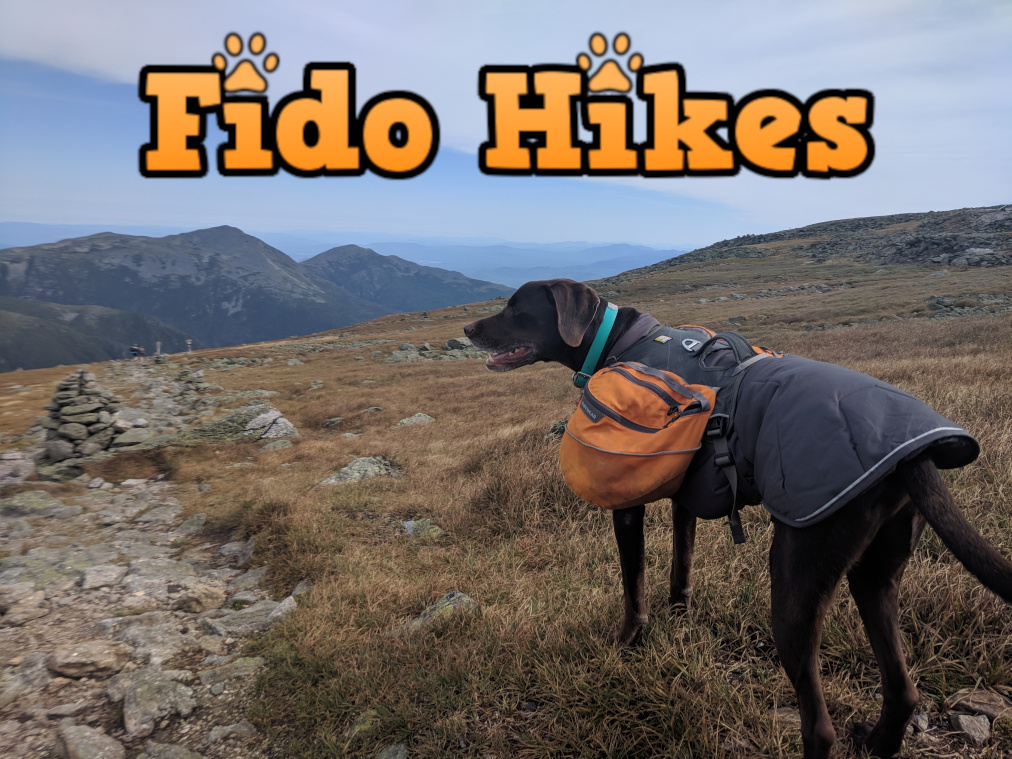
The best dog food for active dogs depends on workload, calorie needs, digestion and the formula’s published nutrient profile. Athletic dogs and working dogs sit on the same nutritional spectrum: whether your dog runs canicross, points birds, jumps agility, pulls a sled, or accompanies you on long hikes, the same comparison points apply. This guide compares six high-protein, high-density foods using a 195-food calorie database and current veterinary performance-nutrition research.
This is planning guidance, not a veterinary prescription. If your dog has a medical condition or is on a prescription diet, confirm any food change with your vet first.
The Best Dog Food Brands for Active Dogs at a Glance
Six formulas from five brands, ranked on the two numbers that decide whether an active dog food actually performs: the protein-to-fat ratio and the calories in each cup. Every calorie figure below comes straight from our 195-food catalog, not from a bag’s marketing copy.
| Food | Protein/Fat | Calories/Cup | Best For | Price |
|---|---|---|---|---|
| Purina Pro Plan Sport | 30/20 | 484 | Overall sport & working dogs | $74.98 |
| Eukanuba Performance Sport | 30/20 | 447 | Joint support (glucosamine + EPA) | $74.99 |
| Victor Hi-Pro Plus | 30/20 | 406 | Best value / kennels | $66.49 |
| Orijen Original | High meat, grain-free | 473 | High meat inclusion | $106.99 |
| Honest Kitchen Whole Grain Chicken | Dehydrated | 485 (dry) | Rehydrated trail meals | $62.71 |
| Pro Plan Sensitive | 27/17 | 467 | Sensitive stomachs | $77.48 |
What Active, Athletic, and Working Dogs Actually Need
An active dog burns fuel the way a maintenance dog never will, and feeding it like a couch dog is how condition slips away by week three of the season. The numbers are clear. Working and performance dogs do best around 28 to 30 percent protein and 18 to 20 percent fat, compared to the roughly 10 to 15 percent fat in standard pet food. That gap is the entire reason “sport” formulas exist.
Protein does the rebuilding. Performance dogs should get more than 24 percent of their metabolizable energy as protein to maintain red cell mass, hold serum albumin, and reduce musculoskeletal injury. The amino acids in that protein are the literal building blocks of new muscle tissue after a hard day.
Fat does the fueling. For low-intensity aerobic work like hunting, sledding, search and rescue, and long trail miles, fat is the preferred energy source. Fat oxidation delivers steady fuel without the crashes a carb-heavy diet can cause. Stamina studies in working dogs improved on higher-fat diets, and the practical takeaway is simple: you can feed a hard-working dog more calories by raising the fat rather than piling on more volume.
Not every active dog is the same animal. Endurance athletes (canicross dogs, sled dogs, backpacking dogs) lean hardest on fat. Sprint athletes (agility, dock diving, flyball, lure coursing) tolerate and even benefit from slightly more carbohydrate because their work comes in short bursts. A 30/20 food is the sensible middle that covers structured exercise, agility, obedience, and hunting for the vast majority of dogs.
What Makes a Food a True High-Performance Formula
“Performance” and “sport” are marketing words on a bag; calorie density is a number you can check, and it is where most so-called athletic dog foods quietly fall apart. When I logged all 195 foods in our calorie catalog, the 153 dry formulas ran from 224 to 520 calories per cup with a median of 390. Only 19 of them cleared 450. That thin top slice is what a hard-working dog actually needs, because every calorie you do not get from a cup is a cup you have to carry, scoop, and ask a tired gut to process.
Run the label test on any bag before you buy it:
- Ratio first. Roughly 30 percent protein and 20 percent fat. Below about 27/17 you are looking at a maintenance food wearing an athletic label.
- Density second. At or above roughly 450 calories per cup. Purina Pro Plan Sport 30/20 hits 484, Purina Pro Plan Sport Active 27/17 hits 475, and Orijen Original hits 473. Victor Performance, despite the name on the bag, sits at 399.
- Gut third. Live probiotics and a highly digestible base, because on event day the stomach quits long before the legs do.
Victor Hi-Pro Plus, at 406 calories per cup, earns its spot on this list on cost per pound rather than calories per scoop. The Honest Kitchen’s dehydrated chicken earns its place as a rehydrated trail meal. To compare carry weight, use each recipe’s kcal/kg: calories per cup describe volume, not mass.
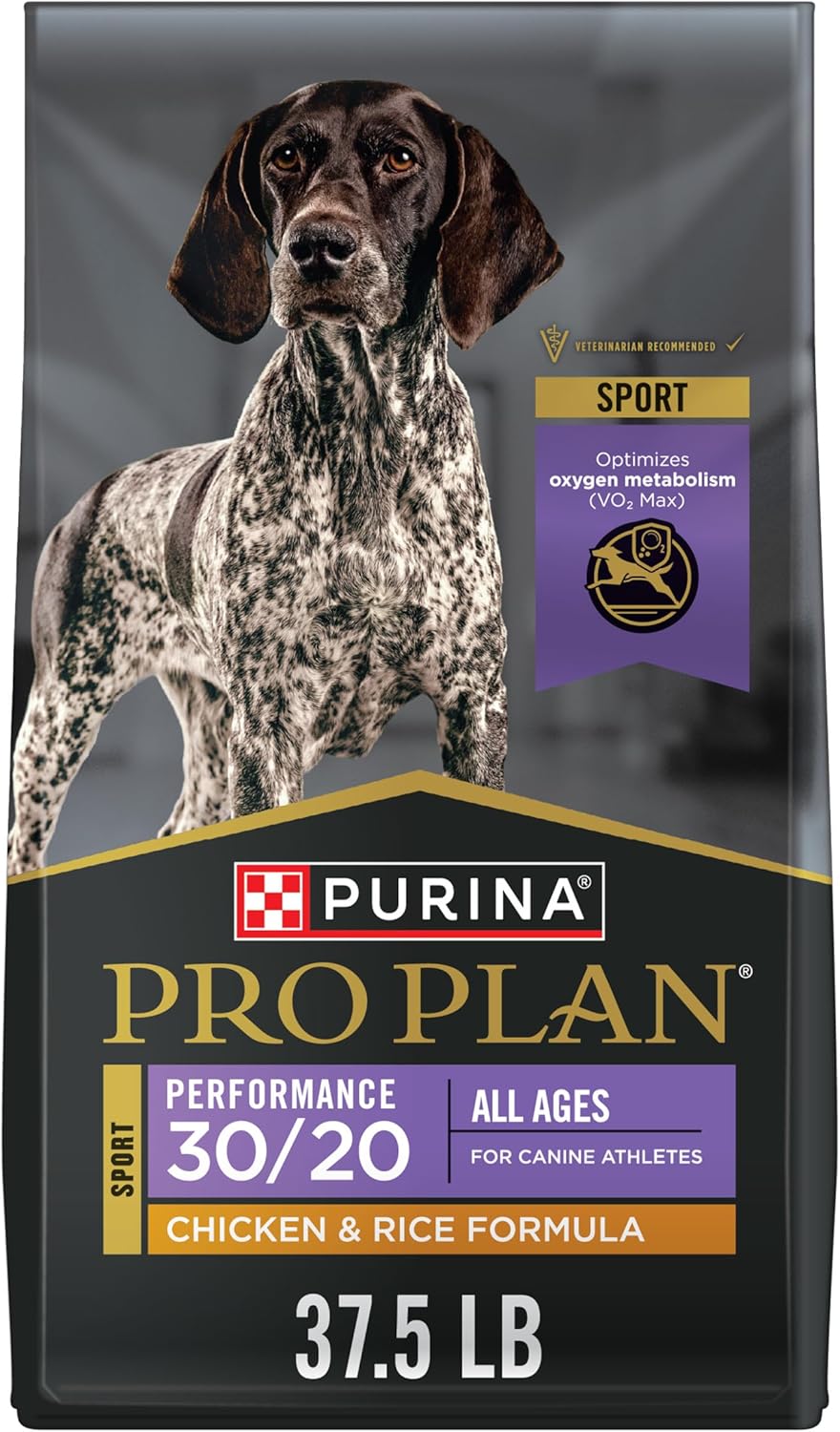
1. Purina Pro Plan Sport 30/20 | Best Overall for Sport Dogs
If you only compare one bag against everything else, make it Pro Plan Sport. At a 30/20 protein-to-fat ratio and 484 calories per cup, it sits at the top of the sport-food category on the metric that matters most for hard-working dogs: usable energy per bowl. The formula is built around oxygen metabolism for endurance, with real chicken as the first ingredient and guaranteed live probiotics for digestive and immune support.
The calories per cup let you compare the volume needed to reach a calorie target. Fewer cups do not automatically mean less carry weight: that requires a comparison using kcal/kg. Check how your dog tolerates the food at home before relying on it during travel or competition.
Where it falls short: it is grain-inclusive, so dogs with confirmed grain sensitivities should look elsewhere, and it is not a sensitive-stomach formula despite the probiotics. Some dogs simply do better on a single novel protein.
Pros:
- Highest published calorie density of the kibbles compared here at 484 kcal/cup.
- True 30/20 sport ratio backed by decades of Purina performance research.
- Guaranteed live probiotics support the gut under travel and event stress.
Cons:
- Grain-inclusive, so not for dogs with diagnosed grain sensitivities.
- Not formulated for sensitive stomachs despite the added probiotics.
2. Eukanuba Premium Performance 30/20 Sport | Best for Joint Support
Dogs that land hard, over and over, need joint support built into the bowl, not bolted on as a supplement. Eukanuba Performance Sport runs the same 30/20 ratio at 447 calories per cup, and its differentiator is the joint package: glucosamine, chondroitin sulfate, and EPA, the omega-3 most linked to joint comfort. For agility dogs absorbing repeated jump impacts, dock divers, and field dogs covering hard ground, that built-in support earns its place.
The animal-based protein delivers the amino acids that strengthen muscle, and the formula is squarely aimed at the same endurance and recovery goals as the rest of this list. It is slightly less calorie-dense than Pro Plan Sport, so a very hard-working dog eats a touch more.
If your dog has no joint concerns and you are optimizing purely for fuel per cup, Pro Plan Sport edges it out. If repetitive impact is part of your dog’s sport, Eukanuba’s joint support is the reason to choose it.
Pros:
- Glucosamine, chondroitin, and EPA built in for repetitive-impact sports.
- Solid 30/20 sport ratio for endurance and recovery.
Cons:
- Lower calorie density (447 kcal/cup) than Pro Plan Sport means slightly larger portions.
- Grain-inclusive formula.
3. Victor Hi-Pro Plus | Best Value
Kennels and breeders feed Victor Hi-Pro Plus by the pallet for one reason: it delivers sport-dog nutrition at the lowest cost per pound on this list. At roughly $52 for a 40 lb bag, 30 percent protein, and a gluten-free multi-meat blend, it is the food that lets you feed several active dogs without flinching at the feed bill. The multi-protein base (beef, chicken, pork, and fish meals) gives a broad amino acid profile, and added probiotics target digestive efficiency.
The tradeoff is calorie density. At 406 calories per cup, it is the lowest of the kibbles here, so your dog eats more cups to hit the same calories. For a single backpacking dog where pack weight matters, that volume penalty counts against it. For a kennel or a multi-dog household feeding at home, the cost savings dwarf the extra cup.
Availability can be regional, so check that it ships to you before you commit a hungry pack to it.
Pros:
- Lowest listed cost per pound of the sport foods compared here.
- Multi-meat protein blend for a diverse amino acid profile.
- Gluten-free with added probiotics.
Cons:
- Lowest calorie density (406 kcal/cup), so dogs eat more volume.
- Regional availability varies.
4. Orijen Original | Best High Meat Inclusion
For owners who want the highest animal-protein inclusion they can buy off a shelf, Orijen Original is the premium choice. It is grain-free, built around a very high meat content, and lands at 473 calories per cup, putting it near the top for density. Dogs that thrive on rich, meat-forward diets often do exceptionally well on it.
This is the food for the owner who prioritizes ingredient quality above all and has the budget to match. At around $107 for a 23.5 lb bag, it is the most expensive option here by a wide margin on cost per pound. The richness is also worth respecting: transition into it slowly, because going too fast can upset a dog that is not used to that level of animal fat and protein.
Choose grain-free for a specific reason. If your dog has a confirmed grain sensitivity, Orijen is one formula to discuss with your veterinarian. If you are picking grain-free as a default, the grain-inclusive sport foods above cost far less.
Pros:
- Very high animal-protein inclusion and premium ingredient quality.
- Strong calorie density at 473 kcal/cup.
Cons:
- Most expensive per pound on this list.
- Rich enough that a slow transition is essential.
5. The Honest Kitchen Dehydrated | For Rehydrated Trail Meals
Choose this for a meal you rehydrate at camp, not a promise to halve your food weight. The manufacturer’s Wholemade Whole Grain Chicken page lists 485 calories per dry cup and a three-minute wait after adding warm water. Follow the mixing directions on your box. Calories per cup cannot tell you whether it is lighter than your current kibble.
The catch is preparation. Budget the water for meals alongside drinking water, and compare the current price per 1,000 calories with the food you already use. Our backpacking food comparison shows how to calculate dry weight and cost for the same calorie total.
If your dog’s biggest demands are at home and your trips are occasional, compare your regular food with the options in our guide to the best dehydrated dog food for backpacking. Test any food change at home before relying on it for a trip.
Pros:
- Rehydrates into a meal at camp.
- Manufacturer lists calories per dry cup for portion planning.
Cons:
- Requires water to serve, a real constraint on dry sections.
- Compare cost per calorie with your usual food before buying a large box.
6. Purina Pro Plan Sensitive Skin & Stomach | Best for Sensitive Stomachs
The number one real-world problem with active dogs is not energy, it is the gut, and this is the food for the dog whose stomach quits before its legs do. Pro Plan Sensitive Skin & Stomach is built on salmon as the first ingredient with easily digestible oat meal, live probiotics, and sunflower oil for omega-6. At 467 calories per cup it stays dense enough to fuel real activity, while being far gentler than a hard 30/20 sport formula on a reactive digestive system.
Stress colitis is the culprit behind most event-day diarrhea. The excitement and travel of a competition or hunt inflame the gut and throw off its bacteria. A highly digestible base food, fed consistently, is the single best defense. The carbohydrate in a recovery-grade diet should be highly digestible, ideally 90 percent or more, which is exactly the design goal here.
It is worth being honest about the ratio. At roughly 27/17 this is not a true sport food, so a hard endurance athlete may need more fuel than it provides. For the active dog whose limiting factor is its stomach, that is the right trade.
Pros:
- Highly digestible salmon-and-oat base with probiotics for stress-prone guts.
- Calorie-dense enough (467 kcal/cup) to support real activity.
Cons:
- 27/17 ratio is not a true sport formula for hard endurance work.
- Single salmon protein limits rotation for picky or allergy-prone dogs.
How to Match a Performance Food to Your Dog’s Workload
The right food depends less on the bag’s marketing and more on what your dog actually does all week. Use this as a starting filter for active and working dogs alike, then confirm anything medical with your vet.
| Dog Type | Priority | Start Here |
|---|---|---|
| Endurance (canicross, sled, backpacking) | Fat as fuel, calorie density | Pro Plan Sport or Honest Kitchen on trail |
| Sprint sports (agility, dock diving, flyball) | Joint support, lean condition | Eukanuba Performance |
| Hunting / field dogs | Calorie density, in-season weight | Victor Hi-Pro Plus |
| Multi-dog kennels | Cost per pound | Victor Hi-Pro Plus |
| Sensitive-stomach dogs | Digestibility | Pro Plan Sensitive |
Use calories per cup for scoop size and kcal/kg for carry weight. Dogs vary widely: a lean 50 lb pointer and a heavy-coated 70 lb husky doing the same miles can need very different amounts. Start with an estimate from our free hiking dog calorie calculator, then compare portions on the Dog Food Calorie Comparison chart. For multi-day trips, Meal Plan Pro turns your inputs into a packing plan.
Feeding Timing and Food Transitions for Active Dogs
When you feed an active dog matters almost as much as what you feed. Feed a small meal four to eight hours before intense work, capped at no more than a third of the daily calories, and never feed right before exercise. Feed the main meal 30 to 60 minutes after your dog has cooled down, which leaves the most time to digest before the next day’s effort. A dog working on a full stomach performs worse and faces higher bloat risk.
Transition foods slowly to protect the gut. Move at 25 percent new for days one and two, 50/50 days three and four, 75 percent new days five and six, and a full switch by day seven. The hard rule: never change foods the week of a big event. A new food plus competition stress is the fastest route to event-day diarrhea.
Hydration ties the whole system together. Dehydrated foods need water to serve, and a hard-working dog needs more water than a resting one regardless of food, so plan water alongside calories for any big effort.
Frequently Asked Questions
- What is the best dog food for active dogs?
- For most active and working dogs, a 30/20 sport formula like Purina Pro Plan Sport Performance 30/20 is the best overall pick. It runs about 30 percent protein and 20 percent fat at 484 calories per cup, which fuels endurance, supports muscle recovery, and lets a hard-working dog hold weight without eating bowl after bowl. For a tighter budget, Victor Hi-Pro Plus delivers a similar 30 percent protein at a lower cost per pound.
- What is the best dog food for athletic dogs?
- Athletic dogs — agility, canicross, dock diving, flyball, field trials — do best on a calorie-dense 30/20 formula, and Purina Pro Plan Sport 30/20 at 484 calories per cup is the densest kibble in our 195-food catalog after Instinct Original. If your dog's sport involves repeated hard landings, Eukanuba Premium Performance 30/20 Sport at 447 calories per cup adds glucosamine, chondroitin, and EPA for joint support. Both beat a standard adult formula, where the median dry food in our catalog lands at just 390 calories per cup.
- What are the best dog food brands for active dogs?
- Five brands earn a place on this list across six formulas: Purina Pro Plan (with two formulas, including its Sensitive Skin and Stomach line), Eukanuba, Victor, Orijen, and The Honest Kitchen. Purina Pro Plan Sport is the best overall pick at 484 calories per cup, Victor Hi-Pro Plus is the value brand at 406, Orijen Original is the premium grain-free option at 473, and The Honest Kitchen Whole Grain Chicken is the trail brand at 485 calories per dry cup.
- What counts as a high-performance dog food?
- A true performance formula pairs roughly 30 percent protein and 20 percent fat with real calorie density. Density is the part most bags hide. Across the 153 dry foods in our calorie catalog the median is 390 calories per cup and only 19 clear 450, so anything at or above that line is genuinely doing performance work. Purina Pro Plan Sport 30/20 (484), Orijen Original (473), and Purina Pro Plan Sport Active 27/17 (475) all clear it. Victor Performance, despite the name, sits at 399.
- How much protein and fat does a working dog need?
- Performance and working dogs do best around 28 to 30 percent protein and 18 to 20 percent fat, well above the roughly 10 to 15 percent fat in standard maintenance foods. Protein rebuilds muscle and maintains red cell mass; fat is the primary fuel for sustained aerobic work like hunting, sledding, and trail running. The classic 30/20 ratio is the sport-food standard for exactly this reason.
- What is the best high-protein dog food for hunting dogs?
- Hunting and field dogs need calorie-dense, fat-fueled food because their condition slips fast during season. Victor Hi-Pro Plus and Purina Pro Plan Sport are both built for it, with a multi-meat or single-meat 30 percent protein base. Feed extra calories during season by increasing the amount, and feed the main meal after the hunt rather than right before.
- Should I feed my active dog before or after exercise?
- Feed a small meal four to eight hours before intense work, capped at about a third of the daily calories, and never feed right before exercise. Feed the main meal 30 to 60 minutes after your dog has cooled down. A full stomach during hard work raises bloat risk and hurts performance, so most of the day's food belongs after the effort, not before it.
- Why does my active dog get diarrhea on event days?
- It is usually stress colitis. Travel, new environments, and the excitement of a competition or hunt inflame the gut and unbalance its bacteria. A highly digestible food, live probiotics, and no last-minute diet changes reduce it. If you are switching foods, finish the transition at least a week before any big event. Persistent or bloody diarrhea needs a vet.
- Is grain-free dog food better for active dogs?
- Not automatically. Active dogs use carbohydrates as part of their fuel mix, and grain-inclusive 30/20 foods like Pro Plan Sport and Eukanuba Performance are options to compare. Grain-free options like Orijen may suit dogs with confirmed grain sensitivities, but the FDA has investigated a possible link between some grain-free diets and heart disease. Choose grain-free for a specific reason, not as a default, and discuss it with your vet.
Get the free Dog Hiking Trail Pack
A printable pre-hike checklist, trail feeding cheat-sheet, and paw + heat safety guide. Free, no spam.
About FidoHikes
Our hiking background includes 900 miles on the Appalachian Trail with our dog Toby. For the basis of a gear recommendation, check the article's experience notes and sources.
Related Articles

Best Dehydrated Dog Food for Backpacking: 6 Options
Compare dehydrated and freeze-dried trail foods by preparation, calories per ounce and resupply needs, with clear limits on weight and cost claims.
7 Dog Harnesses for Hiking: Features and Fit Compared
Compare seven hiking harnesses by published features, leash attachments, handle design and fit. Includes product photos, buying links and sizing guidance.
Dog Calorie Calculator: Daily and Trail Needs by Weight
Free dog calorie calculator plus a kcal-by-weight chart. Get daily calories, cups of food, and pack weight for rest days, day hikes, and backpacking.