
Answering how much to feed a dog in cups only works once you know how many calories a cup of the exact food contains. In the 195-food catalog used for this guide, four cups can range from 896 calories to 2,080 calories depending on the formula.
The short answer: a neutered adult dog in ideal body condition needs about 30 calories per pound at 10 pounds and closer to 20 per pound at 100 pounds, because energy needs scale to body surface area rather than straight weight. A 50-pound adult lands near 1,165 calories a day, which is roughly 3 cups of a median-density kibble. The chart below gives you the number by weight and by life stage, and the section after it shows you how to turn that number into cups of your specific food.
Dog Feeding Chart by Weight and Age
Start with calories, because that is the only number that transfers between foods. These figures come from the same veterinary formula our calculator runs: resting energy requirement multiplied by a life-stage factor. They assume a dog in ideal body condition with normal household activity, meaning walks and play rather than trail miles.
| Dog weight | Resting (RER) | Puppy, under 4 mo | Puppy, 4 to 12 mo | Adult | Senior | Adult cups/day at 390 kcal |
|---|---|---|---|---|---|---|
| 5 lb | 130 | 390 | 260 | 205 | 180 | 0.5 |
| 10 lb | 220 | 655 | 435 | 350 | 305 | 0.9 |
| 15 lb | 295 | 885 | 590 | 470 | 415 | 1.2 |
| 20 lb | 365 | 1,100 | 730 | 585 | 510 | 1.5 |
| 30 lb | 495 | 1,490 | 990 | 795 | 695 | 2.0 |
| 40 lb | 615 | 1,845 | 1,230 | 985 | 860 | 2.5 |
| 50 lb | 725 | 2,180 | 1,455 | 1,165 | 1,020 | 3.0 |
| 60 lb | 835 | 2,500 | 1,670 | 1,335 | 1,170 | 3.4 |
| 70 lb | 935 | 2,810 | 1,875 | 1,500 | 1,310 | 3.8 |
| 80 lb | 1,035 | 3,105 | 2,070 | 1,655 | 1,450 | 4.2 |
| 90 lb | 1,130 | 3,390 | 2,260 | 1,810 | 1,585 | 4.6 |
| 100 lb | 1,225 | 3,670 | 2,445 | 1,960 | 1,715 | 5.0 |
All calorie figures are per day. The adult column assumes a neutered dog, which is the common case; an intact adult runs about 12 percent higher. The cups column uses 390 kcal per cup, the median dry food in our catalog, and it is a placeholder until you look up your own bag.
Puppy rows use the puppy’s current weight rather than its projected adult weight, which is where this chart differs from most bag charts. AAHA describes these factors as general guidelines for estimating intake and directs owners to adjust calories by monitoring body weight and body condition. A lean working border collie and a couch-loving basset of the same weight are not the same dog.
Why the Chart on Your Dog Food Bag Overfeeds Most Dogs
Bag charts tell you cups without telling you what a cup contains. When we compiled the calorie content statements for 195 US dog foods, the dry-food range came out at 224 to 520 kcal per cup. That is a 2.3x spread inside a single measuring cup.
| Food | Form | kcal per cup |
|---|---|---|
| Royal Canin Veterinary Satiety Support | Dry | 224 |
| Hill’s Science Diet Adult Light | Dry | 243 |
| Eukanuba Adult Medium Breed | Dry | 383 |
| Victor Hi-Pro Plus | Dry | 406 |
| Orijen Original | Dry | 473 |
| The Honest Kitchen Whole Grain Chicken | Dehydrated | 485 |
| Purina Pro Plan Sport 30/20 | Dry | 484 |
| Instinct Original Grain-Free Chicken | Dry | 520 |
Feed four level cups of the Royal Canin and your dog gets 896 calories. Feed four level cups of the Instinct and your dog gets 2,080. Same scoop, same arm motion, more than double the energy. Only 10 of the 153 dry foods we catalogued fall under 300 kcal per cup and only 8 clear 470, so most bags land in a middle band that feels interchangeable and is not.
The second failure is that bag charts assume an average dog. They rarely adjust for neutering, which lowers energy needs, or for body condition, or for whether your dog spends the day hiking or sleeping on the couch. A range like “3 to 4 cups for 50 to 75 pounds” is a manufacturer covering every dog in that band at once. You are feeding one dog.
How to Convert Your Dog’s Calories Into Cups
Three steps, and the second one is the only one people skip.
- Find your dog’s daily calories in the chart above, using its current weight and life stage.
- Find your food’s kcal per cup. Every US dog food is required to print a calorie content statement, expressed in kcal per kilogram and usually also per cup. It is on the bag near the guaranteed analysis, on the brand’s product page, or in the spec sheet. If you cannot find it in 60 seconds, look it up in our dog food calorie comparison tool, which holds the verified figures for all 195 foods.
- Divide. Daily calories divided by kcal per cup equals cups per day. Split that across meals.
Worked example. A 50-pound neutered adult needs about 1,165 calories. On Victor Hi-Pro Plus at 406 kcal per cup, that is 2.9 cups a day, or roughly 1.2 cups in the morning and 1.7 at night. Move that same dog to Hill’s Science Diet Adult Light at 243 kcal per cup and the correct portion jumps to 4.8 cups. Nothing about the dog changed. The food did.
Treats count toward the same budget. The usual guidance is to hold treats to about 10 percent of daily calories, which for our 50-pound dog is roughly 115 calories. That is one medium biscuit and a few training rewards, not a handful of chews on top of a full bowl.
How Much to Feed a Puppy by Age
Puppies are the one group where the number moves faster than your habits do. A puppy under four months needs about three times its resting energy requirement, and from four to twelve months it needs about two times. Those factors sit on top of a resting number that is itself climbing as the puppy grows, so the daily calorie target can rise every few weeks.
| Puppy age | Energy factor | 20-lb puppy | Meals per day |
|---|---|---|---|
| Under 4 months | 3.0 x RER | 1,100 kcal | 3 to 4 |
| 4 to 12 months | 2.0 x RER | 730 kcal | 3, tapering to 2 |
| Over 12 months | 1.6 x RER (adult) | 585 kcal | 2 |
Re-weigh a growing puppy every two to three weeks and re-run the chart. Large and giant breeds are the exception worth naming: overfeeding a large-breed puppy accelerates growth in a way that is associated with orthopedic problems, so feed to a lean body condition and use a food formulated for large-breed growth. Your vet is the right person to set that target, not a chart.
The drop from puppy to adult portions is abrupt. A 20-pound puppy eating 1,100 calories becomes a 20-pound adult eating 585, which is a 47 percent cut. Most puppies do not need it all at once. Step down over a few weeks around the twelve-month mark, watching body condition rather than the calendar.
If your puppy is also your future trail partner, our guide on when to start hiking with a puppy covers the growth-plate timeline that should govern mileage before any of this matters.
How Much to Feed an Adult Dog
The adult number is 1.6 times resting energy for a neutered dog, and that factor is doing more work than most owners realize. Neutering lowers energy requirements by roughly 20 to 30 percent. An intact adult runs closer to 1.8 times resting energy, which for a 50-pound dog is about 1,310 calories rather than 1,165.
The practical mistake is not adjusting after the surgery. The dog keeps eating the same portion, the requirement drops, and six months later there is a body condition problem that took a year to build and will take a year to unwind.
Activity is the other adjustment. The chart’s adult column assumes ordinary household activity. A dog that runs 5 miles with you every morning or works livestock all day is in a different bracket entirely, closer to 2.0 to 3.5 times resting energy, and it usually needs a denser food rather than an ever-larger bowl. That is the case where a performance formula earns its price, and we break the options down in our guide to dog food for active dogs.
How Much to Feed a Senior Dog
Senior portions come down about 12 percent, not by a third. The senior factor is 1.4 times resting energy against 1.6 for an adult, so our 50-pound dog goes from roughly 1,165 to 1,020 calories a day. That is a real cut and a modest one.
Two cautions make senior feeding different from adult feeding. First, keep protein up while calories come down. Older dogs lose lean muscle before they lose fat, and cutting portions of a lower-protein “senior” formula can accelerate that. Second, an unexplained appetite or weight change in an older dog is a veterinary question before it is a portion question. Kidney disease, dental pain, and endocrine conditions all show up first as a dog that eats differently.
Many senior dogs also do better on three smaller meals than two larger ones, particularly if they have slowed digestion or joint pain that makes standing at a bowl uncomfortable.
Adjust the Portion by Body Condition, Not by the Bag
The chart is a starting estimate, and body condition shows whether intake fits the individual dog. Run your hands along your dog’s sides: you should feel the ribs easily under a thin layer of fat, without pressing. Look down from above and you should see the body narrow behind the ribs. Look from the side and the belly should rise toward the hind legs instead of running flat.
If your dog is carrying extra weight, multiply the chart figure by 0.9. If it is genuinely underweight, multiply by 1.1. For our 50-pound example that is 1,050 calories on the low side and 1,280 on the high side.
Then run a two-week loop. Change the portion by 10 percent, hold it for two weeks, weigh, and reassess. Faster than that and you cannot tell a real trend from normal fluctuation. A safe rate of loss for an overweight dog is roughly 1 to 2 percent of body weight per week, and weight loss in a dog with a health condition belongs with your vet.
How Many Meals a Day
Two meals a day is right for most adult dogs. Puppies under four months do better on three to four, tapering to two by about six months. Some senior dogs do better on three small meals.
The exception worth taking seriously is bloat, or gastric dilatation-volvulus. ACVS associates GDV with rapid ingestion of large meals, one large daily meal and a deep chest. It does not establish a universal one-hour or two-hour exercise interval. Ask your veterinarian about meal size and timing for a dog at higher risk.
When Your Dog Needs More Than the Baseline
Everything above is a starting home estimate. Trail work can change energy needs, but no single hiking percentage applies to every dog. AAHA’s general working-dog ranges span 1.6-2.0 times RER for light work, 2.0-5.0 for moderate work and 5.0-11.0 for heavy work.
Our dog hiking calorie calculator stacks trip type, hours, terrain and temperature adjustments on top of the baseline and caps its result at 2.5 times maintenance. Those trail modifiers are internal planning heuristics, not clinically validated multipliers. Use the result as a starting estimate, then follow AAHA’s direction to monitor body weight and body condition and work with your veterinarian.
For trips longer than a day, the question shifts from portions to logistics: what food type, how to carry it, and how to store it away from wildlife. See feeding your dog on a backpacking trip for the multi-day version.
Frequently Asked Questions
How much food should I feed my dog by weight?
A neutered adult dog in ideal body condition needs roughly 350 calories a day at 10 pounds, 585 at 20 pounds, 1,165 at 50 pounds, and 1,960 at 100 pounds. Convert that to cups by dividing by your food’s kcal per cup, printed in its calorie content statement. At a median 390 kcal per cup, the 50-pound dog eats about 3 cups a day.
How many cups of food should I feed my dog?
There is no universal cup answer. Cup values in our 195-food catalog range from 224 to 520 kcal for dry food alone, so four cups is 896 calories of one formula and 2,080 calories of another. Find your daily calorie number in the chart above, then divide by the kcal per cup on your own bag.
How much should I feed a puppy?
Puppies under four months need about three times their resting energy requirement, and puppies from four to twelve months need about two times. A 20-pound puppy under four months needs roughly 1,100 calories a day, versus 585 for an adult at the same weight. Puppies gain weight fast, so re-run the number every two to three weeks.
Should senior dogs eat less?
Usually yes, but by about 12 percent rather than a dramatic cut. The senior factor is 1.4 times resting energy against 1.6 for an adult, so a 50-pound dog drops from about 1,165 to 1,020 calories a day. Keep protein up while calories come down, because seniors lose muscle before they lose fat.
Is the feeding chart on the dog food bag accurate?
It is accurate for that specific food and unreliable as a general rule. Bag charts assume an average activity level and rarely adjust for neutering or body condition, so they tend to overfeed calm indoor dogs. Use the bag’s calorie content statement, which is a hard number, and treat its cup recommendation as a rough band.
How do I know if I am feeding my dog the right amount?
Use body condition rather than the scale alone. You should feel ribs easily under a thin fat layer, see a waist from above, and see a tuck from the side. Weigh your dog every two weeks after a portion change, adjust by 10 percent at a time, then wait two more weeks before changing anything again.
How much more should I feed on hiking days?
There is no universal hiking percentage. AAHA’s broad working-dog ranges are starting guidelines, and the calculator linked above applies internal terrain, hours, temperature and trip-type heuristics capped at 2.5 times maintenance. Use its result as a planning estimate and adjust with body-weight, body-condition and veterinary guidance.
Do treats count toward my dog’s daily calories?
Yes, and they are the most common source of hidden weight gain. Hold treats to about 10 percent of daily calories, which is roughly 115 calories for a 50-pound adult. Subtract that from the meal portion rather than adding it on top, especially during heavy training weeks.
Frequently Asked Questions
- How much food should I feed my dog by weight?
- A neutered adult dog in ideal body condition needs roughly 350 calories a day at 10 pounds, 585 at 20 pounds, 1,165 at 50 pounds, and 1,960 at 100 pounds. Convert that to cups by dividing by your food's kcal per cup, which the bag prints in its calorie content statement. At a median 390 kcal per cup, the 50-pound dog eats about 3 cups a day.
- How many cups of food should I feed my dog?
- There is no universal cup answer, because cup values in our 195-food catalog range from 224 to 520 kcal for dry food alone. Four cups is 896 calories of a weight-management formula and 2,080 calories of a dense grain-free kibble. Find your daily calorie number first, then divide by the kcal per cup on your own bag.
- How much should I feed a puppy?
- Puppies under four months need about three times their resting energy requirement, and puppies from four to twelve months need about two times. A 20-pound puppy under four months needs roughly 1,100 calories a day, versus 585 for an adult at the same weight. Puppies gain weight fast, so re-run the number every two to three weeks.
- Should senior dogs eat less?
- Usually yes, but by about 12 percent rather than a dramatic cut. The senior factor is 1.4 times resting energy versus 1.6 for an adult, so a 50-pound dog drops from about 1,165 to 1,020 calories a day. Keep protein up while calories come down, because seniors lose muscle before they lose fat.
- Is the feeding chart on the dog food bag accurate?
- It is accurate for that specific food and inaccurate as a general rule. Bag charts assume an average activity level and often a range with no body-condition adjustment, so they tend to overfeed calm, neutered, indoor dogs. Use the bag's calorie content statement, which is a hard number, and ignore its cup recommendation.
- How do I know if I am feeding my dog the right amount?
- Use body condition, not the scale alone. You should feel ribs easily under a thin fat layer, see a waist from above, and see a tuck from the side. Weigh your dog every two weeks after a portion change. Adjust by 10 percent at a time, then wait two more weeks before changing anything again.
- How much more should I feed on hiking days?
- There is no universal hiking percentage. AAHA lists broad working-dog starting ranges of 1.6-2.0 times RER for light work, 2.0-5.0 for moderate work and 5.0-11.0 for heavy work, then directs owners to adjust intake by monitoring body weight and body condition. Our calculator's trail modifiers are internal planning heuristics, not clinically validated multipliers.
- How many times a day should a dog eat?
- Feeding frequency depends on the individual dog and veterinary plan. ACVS associates GDV with rapid ingestion of large meals, one large daily meal and a deep chest, but it does not establish a universal one-hour exercise interval. Ask your veterinarian about meal size and timing for a dog at higher risk.
Get the free Dog Hiking Trail Pack
A printable pre-hike checklist, trail feeding cheat-sheet, and paw + heat safety guide. Free, no spam.
About FidoHikes
Our hiking background includes 900 miles on the Appalachian Trail with our dog Toby. For the basis of a gear recommendation, check the article's experience notes and sources.
Related Articles
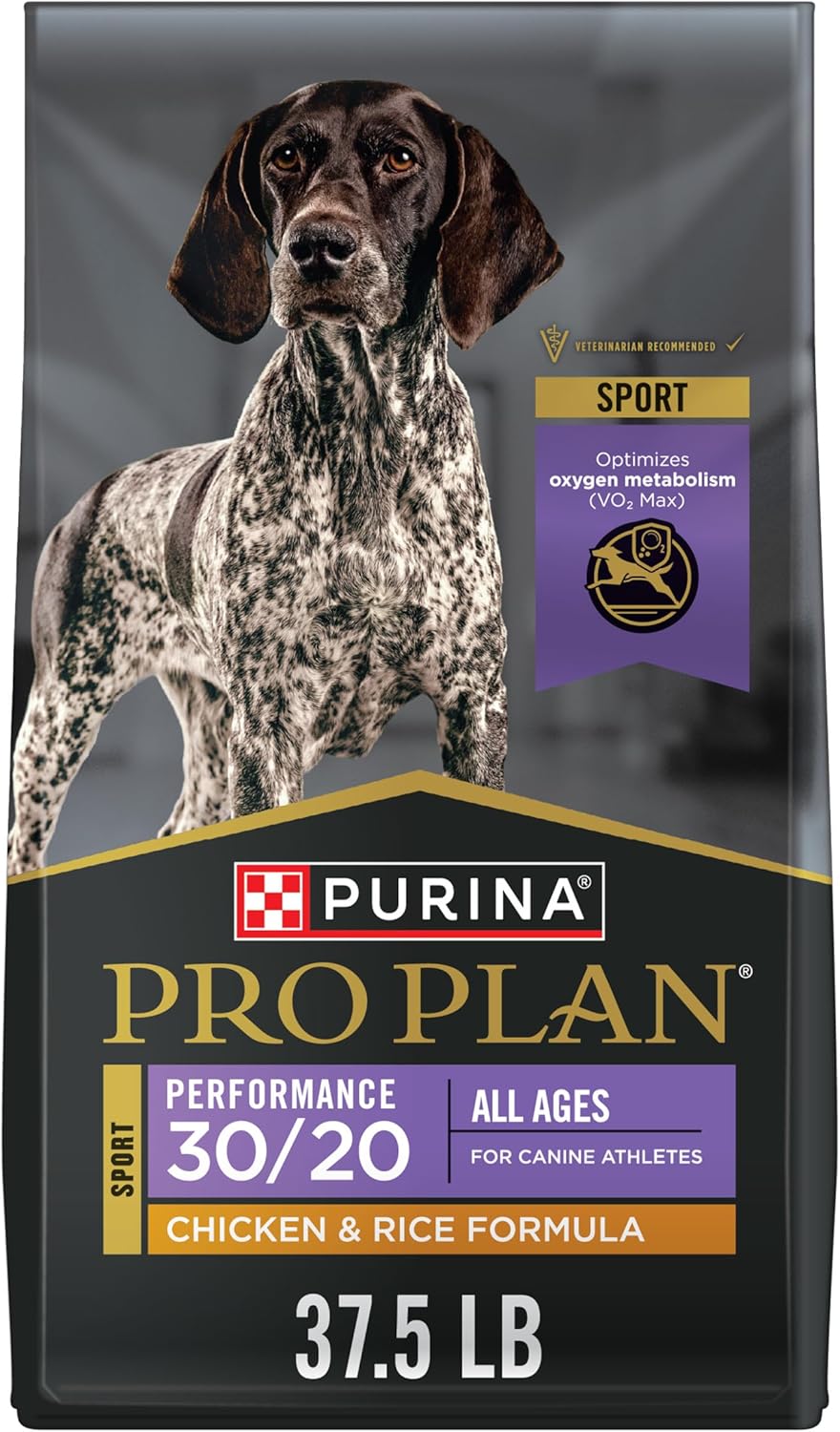
Best Dog Food for Active Dogs (2026): 6 Athletic Formulas
Compare six high-protein performance formulas by calories, protein-to-fat ratio, and price per pound.
What to Feed Your Dog on a Multi-Day Backpacking Trip
How much to pack, what type of food, when to feed, and how to store it for multi-day backpacking and thru-hikes.
Dog Calorie Calculator: Daily and Trail Needs by Weight
Free dog calorie calculator plus a kcal-by-weight chart. Get daily calories, cups of food, and pack weight for rest days, day hikes, and backpacking.

When Can You Hike With a Puppy? Age-by-Age Guide
Safe puppy hiking ages by breed, vaccines, distance, and terrain so you know when to start short hikes without overdoing it.